
Neurofeedback Therapy in India: The Complete Guide
What neurofeedback therapy actually is, how a QEEG brain map shapes it, what the research does and doesn’t show, what it costs to ask about, and how to choose a centre in India you can trust.
In short
- Neurofeedback therapy is a form of EEG biofeedback: sensors read your brainwaves and a screen or sound rewards you, moment by moment, when your brain moves toward a healthier pattern.
- Good neurofeedback in India starts with a QEEG brain map, so training is planned from your own data rather than a one-size protocol.
- The strongest research is for ADHD; there is promising but smaller evidence for sleep, anxiety, low mood, migraine and focus.
- It is non-invasive and drug-free, usually needs 20–40 sessions, and works best alongside, not instead of, medical care.
What is neurofeedback therapy?
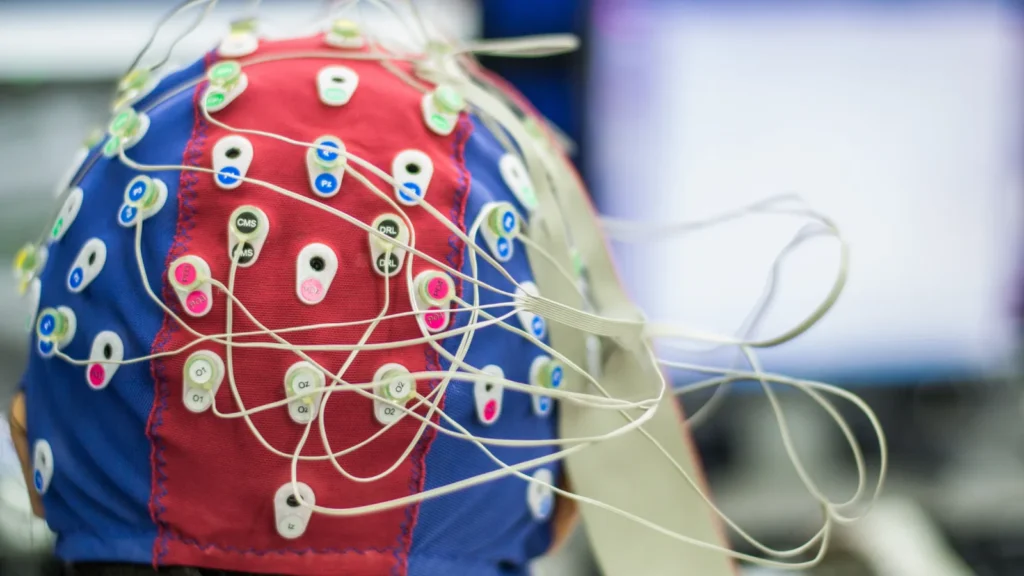
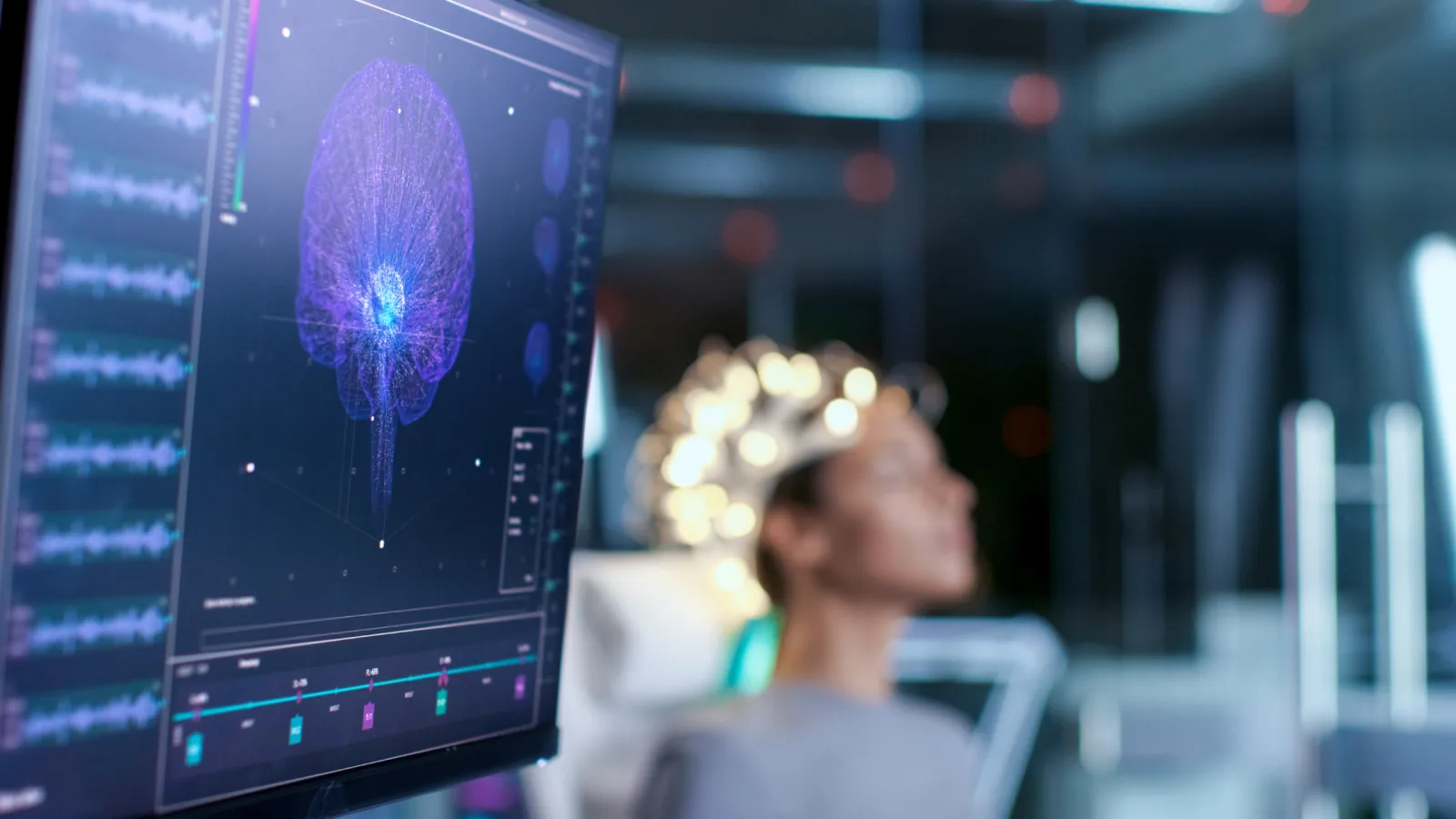
Neurofeedback therapy is brain training that uses your own brain activity as the teacher. Small sensors rest on the scalp and read the brain’s electrical rhythms (the EEG). Software watches those rhythms in real time. When your brain produces more of the pattern you are training toward — for example, steadier focus or a calmer resting state — the screen brightens, a video plays smoothly or a tone sounds. When it drifts away, the feedback fades.
You don’t have to “try” in the usual sense. The brain is very good at learning from immediate rewards, and over repeated sessions it starts to produce the rewarded pattern more easily on its own. That learning principle — operant conditioning — is the same one behind every habit you’ve ever formed.
Neurofeedback is sometimes called EEG biofeedback or brainwave training. It is one branch of the wider field of biofeedback therapy, which also trains heart rate variability, breathing, muscle tension and skin temperature.
How neurofeedback works, step by step
A careful neurofeedback programme in India usually follows four stages. If a centre skips the first one, ask why.
- Assessment and history. A conversation about your goals, sleep, medication, school or work, and medical history. Anything that needs a doctor first — seizures, head injury, sudden changes in mood or memory — is flagged here.
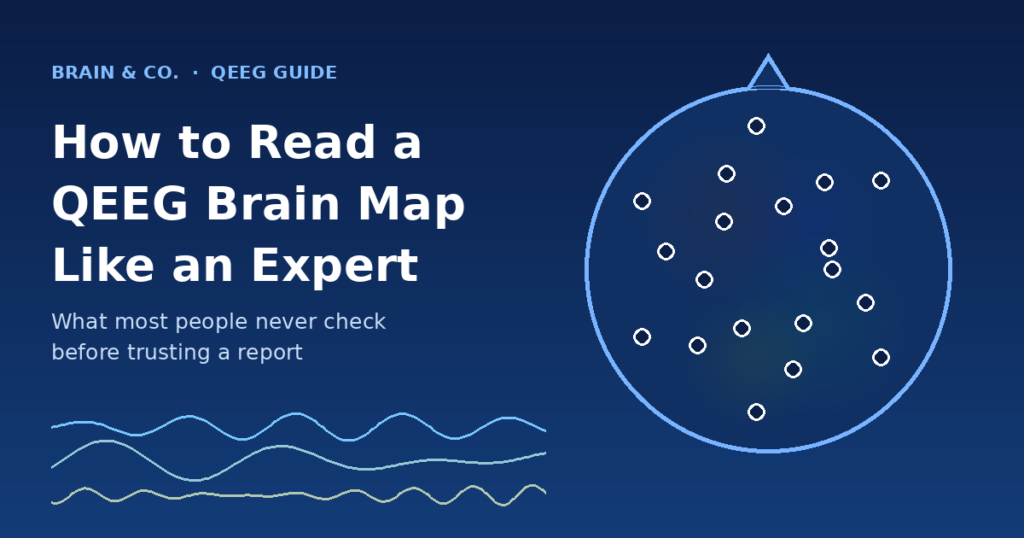
- QEEG brain mapping. A 19-channel recording (a quantitative EEG) is compared with age-matched reference data. It shows where brain activity is running faster, slower or less connected than expected. We explain every step in what happens during QEEG brain mapping. New to the idea? Start with our beginner’s guide to QEEG brain mapping.
- A protocol built from the map. Your clinician chooses which sites and frequencies to train, and sets the reward thresholds. Two people with the same label — say, “anxiety” — can have very different maps and very different plans.
- Training sessions with regular review. Sessions of around 30–45 minutes, typically two or three a week. Progress is tracked with symptom scales and, where helpful, a repeat map partway through.
What a neurofeedback session feels like
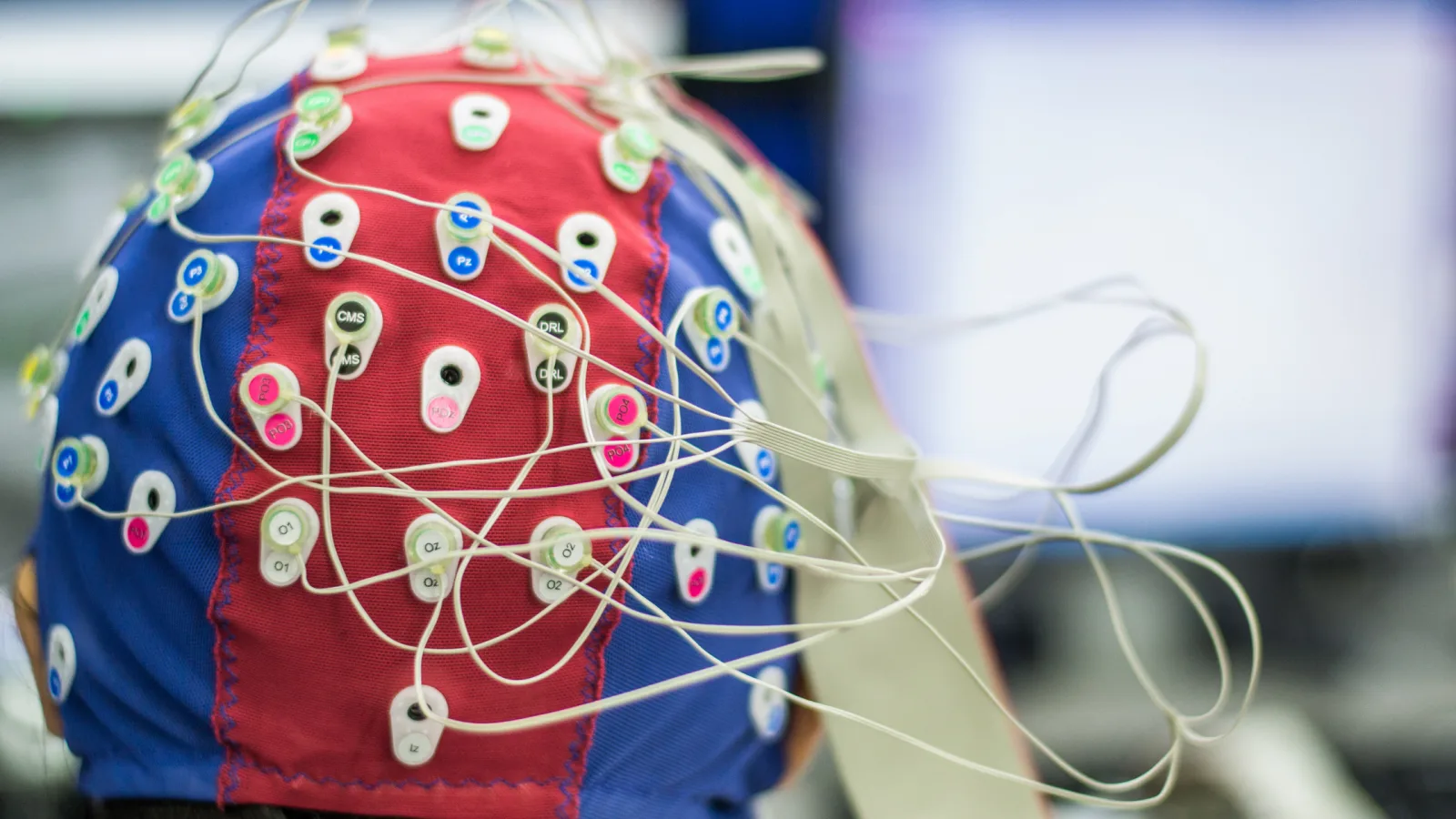
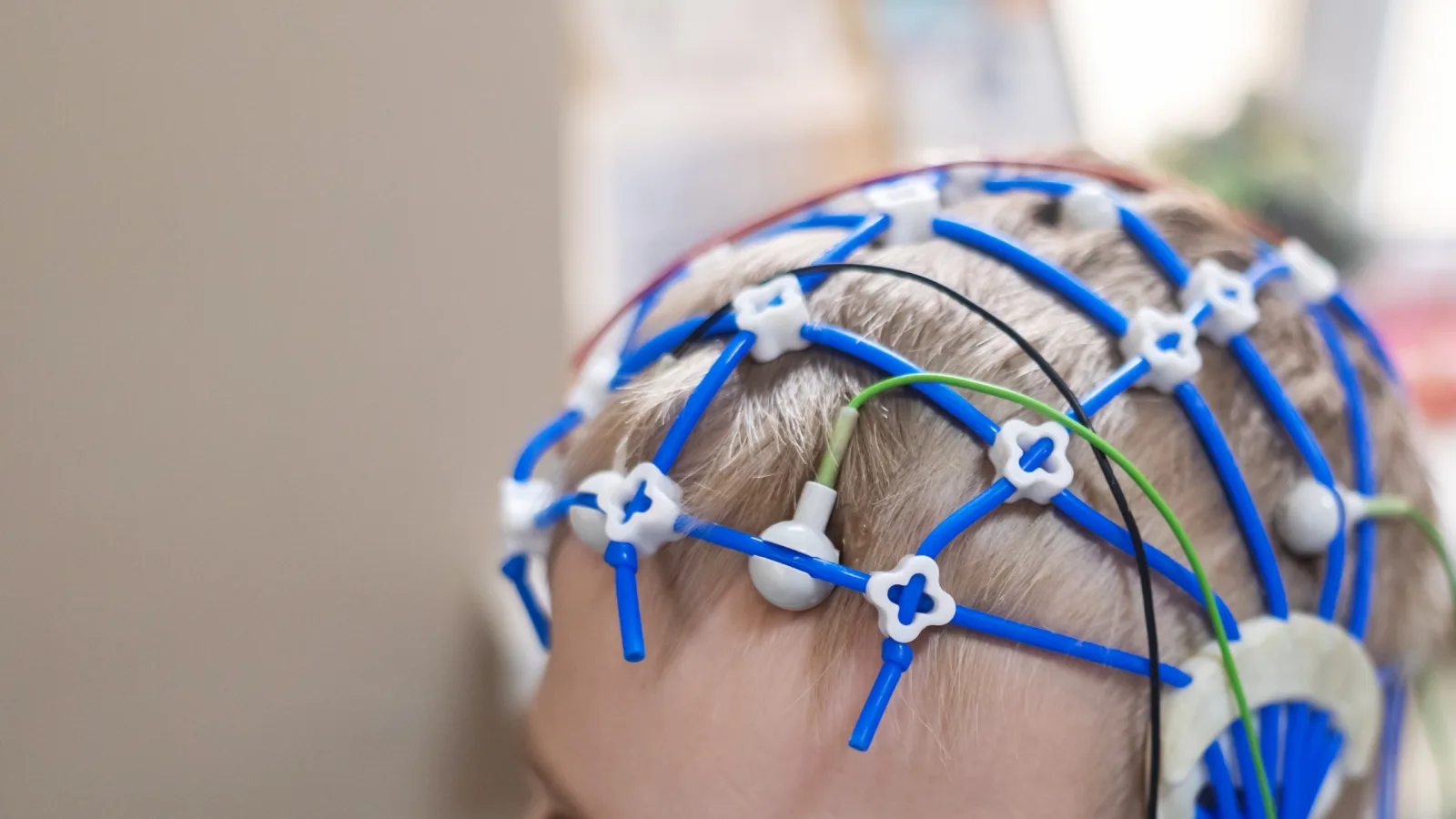
You sit in a comfortable chair. A clinician places a few sensors on the scalp and ear with a little conductive paste. Then you watch a film, play a simple game or listen to sound. That’s it.
Most people describe it as relaxing, and children often treat it as screen time. Some notice feeling calmer or sleepier afterwards; a few feel mildly tired or get a light headache in the first sessions, which usually settles as the protocol is fine-tuned. There are no needles, no electrical current into the brain and no medication. Our page on neurofeedback side effects covers the full list honestly.
Which brainwaves does neurofeedback train?
The EEG is usually described in frequency bands. Each band is linked with different states of the brain, and a protocol rewards more or less of a band at specific sites on the scalp. Which bands and sites are trained depends on your QEEG map and your goals, not on a diagnosis alone.
| Band | Approximate range | Usually linked with |
|---|---|---|
| Delta | 0.5–4 Hz | Deep sleep |
| Theta | 4–8 Hz | Drowsiness and daydreaming; excess theta while awake is seen in some people with attention difficulties |
| Alpha | 8–12 Hz | Relaxed, calm wakefulness, especially with eyes closed |
| SMR | 12–15 Hz | Calm, still focus; trained in some attention and sleep protocols |
| Beta | 15–30 Hz | Active thinking and concentration; too much fast beta can go with over-arousal and worry |
Sensor sites follow the international 10–20 system used in all EEG work. Frontal and central sites are common starting points, but a good protocol is chosen from your own map, reviewed as you progress, and adjusted if you feel tired, wired or unsettled after sessions.
What neurofeedback is used for: benefits and evidence
This is the section most websites get wrong, either by overselling or by lumping every condition together. Here is a plain-language summary of where the research stands.
| Area | Strength of evidence | What that means for you |
|---|---|---|
| ADHD (children and adults) | Strongest — many trials and meta-analyses | Reasonable first-line option to discuss, especially where families want a drug-free route or medication isn’t well tolerated. See neurofeedback for children with ADHD. |
| Migraine and tension headache | Moderate — biofeedback for headache has a long research history | Often combined with HRV and thermal biofeedback plus trigger management. |
| Sleep and insomnia | Promising, smaller studies | Useful alongside sleep habits and CBT-I. Read neurofeedback for insomnia. |
| Anxiety and stress | Promising, growing evidence | Works well as a skill-building complement to therapy. |
| Low mood | Early and mixed | A complement to care from a doctor or psychologist — never a replacement. |
| Memory, concentration, brain fog | Emerging | Often chosen by students and professionals; set clear, measurable goals. See executive performance and exam stress brain training. |
| Autism | Limited; best for co-occurring attention, sleep or anxiety difficulties | It does not “treat autism”. Read our honest take on neurofeedback for autism. |
What the research actually shows
Neurofeedback has been studied since the 1960s, and the research base is larger than many people realise. It is also genuinely debated, and you deserve both sides.
- ADHD has the most evidence. A widely cited meta-analysis (Arns and colleagues, 2009) pooled controlled studies and reported large effects on inattention and impulsivity and a medium effect on hyperactivity.
- The critique is about blinding. A later meta-analysis (Cortese and colleagues, 2016) found clear improvements when parents rated symptoms, but smaller and non-significant effects when ratings came from people who didn’t know which treatment a child had. Part of the benefit may come from expectation and the structure of regular sessions.
- Protocols matter. Standard, well-studied protocols delivered with enough sessions tend to perform better in research than ad-hoc ones. That’s one reason we plan from a QEEG and track outcomes.
- Durability looks encouraging. Follow-up studies in ADHD suggest gains are often maintained 6–12 months after training ends, unlike medication effects which stop when the medicine stops.
The honest summary: neurofeedback is a legitimate, evidence-informed option with the strongest support in ADHD, but it isn’t magic and it doesn’t work for everyone. If you’d like the long version, read does neurofeedback work?
Is neurofeedback safe?
For most children and adults, yes. Neurofeedback only reads brain activity; it doesn’t send current into the brain (that’s a different technique, like tDCS or TMS). The main risks are short-lived tiredness, irritability, headache or trouble sleeping if a protocol is too strong — which is why sessions are reviewed and adjusted.
Extra care is needed for people with a history of seizures, recent head injury or serious psychiatric illness; in these cases we work alongside your doctor. More detail: is neurofeedback safe?
How many sessions does neurofeedback take?
Most programmes fall between 20 and 40 sessions, at two or three sessions a week. Some goals, such as sleep or stress, can show change in the first 10–15; long-standing attention difficulties usually need the fuller course. The learning needs repetition to stick, much like learning a language or an instrument.
We review progress roughly every 10 sessions and will tell you plainly if it isn’t helping. Full breakdown: how many neurofeedback sessions do you need?
Neurofeedback, medication and therapy
Neurofeedback works best as part of a plan, not as a rival to other care.
- Never stop or change medication on your own. Some people reduce medication over time with their doctor’s guidance; that decision always sits with the prescriber.
- It pairs well with therapy. Counselling and CBT teach skills; neurofeedback can make it easier for the brain to use them.
- It is not an emergency service. If you or someone you love is in crisis, contact a doctor or call Tele-MANAS on 14416 (free, 24×7, in many Indian languages).
For ADHD families weighing options, see neurofeedback vs ADHD medication.
Neurofeedback cost in India: what to ask
Prices vary widely between cities and centres, and a low per-session price can hide a long, unplanned programme. Rather than compare headline numbers, ask every centre the same questions:
- Is a QEEG brain map included, and will someone explain the report to me in person?
- How many sessions do you expect for my goal, and what will you measure to judge progress?
- When will you review the plan, and what happens if I’m not improving?
- Is there a package price, and what is the refund or pause policy?
- Who designs the protocol, and what are their qualifications?
A centre that answers these clearly is usually better value than the cheapest per-session rate.
How to choose a neurofeedback centre in India
India has no single licence for neurofeedback, so quality varies. These signals help:
- Training and certification. Look for clinicians trained through recognised bodies such as the Biofeedback Certification International Alliance (BCIA), or members of the International Society for Neuroregulation & Research (ISNR).
- Assessment first. A proper intake and QEEG before training starts.
- Measured outcomes. Symptom scales at the start and at regular reviews.
- Honest limits. They tell you what it probably won’t help with, and refer on when needed.
Red flags: promises of a “cure” or “guaranteed results”; claims of being “FDA approved” for every condition; pressure to stop medication; and fingerprint-based “brain tests” that claim to reveal a child’s talents. Those last ones are not brain mapping at all — we explain why in brain mapping in India: QEEG vs EEG vs MRI vs DMIT.
Neurofeedback therapy in Nashik and Mumbai
Brain & Co. offers QEEG brain mapping, neurofeedback and biofeedback therapy for children and adults at our Nashik centre and Mumbai centre. Every programme starts with a consultation and a QEEG, and you get a written plan with clear goals and review points before any training begins.
Frequently asked questions
Read next
Start with a QEEG brain map
Find out what your brain activity looks like and whether neurofeedback is the right fit — at our Nashik or Mumbai centre.
This guide is for general information and is not medical advice. Neurofeedback is a complementary approach and does not replace diagnosis or treatment by a qualified doctor. If you are in crisis, call Tele-MANAS on 14416 or your nearest emergency service.
Brain & Co. · Nashik & Mumbai
Talk to us about neurofeedback
Every programme starts with a conversation and a QEEG brain map, so the plan is built from your own data. Leave your number and we will call you back within one working day.
- Non-invasive, no medication involved
- Centres in Nashik (Sharanpur Road) and Mumbai (Lower Parel)
- More about neurofeedback at Brain & Co. →