
If you live with anxiety, you know how it dominates your thoughts and hijacks your body’s stress response. Your heart races without warning. Your mind floods with worst-case scenarios. Muscle tension grips your neck and shoulders. Traditional anxiety treatments—medications and talk therapy—help many people, but what if there’s a way to directly address the brain patterns driving your anxiety? What if you could literally see what’s happening in your anxious brain and retrain it to respond differently? That’s the promise of QEEG for anxiety—a cutting-edge approach that uses brain mapping to identify anxiety-specific neural patterns and treat them through targeted neurofeedback training.
This comprehensive guide explores the neuroscience of anxiety, what QEEG brain maps reveal about anxious brains, and how neurofeedback training can help you regain control of anxiety symptoms—often without medication or as a powerful complement to therapy.
Understanding Anxiety Through Brain Science
Anxiety is often dismissed as “just stress” or a personal weakness, but neuroscience reveals a more complex reality. Anxiety disorders are legitimate neurological conditions involving disrupted communication between brain regions responsible for threat detection, emotional regulation, and rational thinking.
The anxious brain operates differently at the neurobiological level. Brain regions that should work together in harmony become dysregulated. The amygdala (threat detection center) becomes hyperactive, constantly scanning for danger. The prefrontal cortex (rational thinking center) becomes underactive, unable to effectively calm the alarm bells. This neurobiological mismatch is why anxiety feels so real and overwhelming—it’s not psychological weakness, it’s a measurable brain function problem.
Understanding this brain-based nature of anxiety is crucial because it changes how we can treat it. Rather than treating anxiety as a purely psychological or emotional problem, we can address the underlying neurobiological dysregulation. This is where QEEG brain mapping becomes transformative.
Research shows that approximately 19% of adults experience anxiety disorders annually, yet many remain untreated or incompletely treated. Medications help some people but carry side effects and don’t create lasting neurobiological change. Talk therapy works well for many, but takes months or years. Brain-based interventions like QEEG-guided neurofeedback offer another powerful option—one that can complement or provide an alternative to traditional treatments.
Anxiety Brain Patterns: What QEEG Reveals
QEEG brain mapping reveals consistent neurobiological patterns in people with anxiety disorders. While each person’s anxious brain is unique, research has identified predictable patterns that correlate strongly with anxiety symptoms.
The most common anxiety-related QEEG patterns include:
Excess Beta Activity in Frontal Regions
Beta waves (13-30 Hz) represent mental activity and arousal. While some beta is normal and healthy, excessive beta—particularly in the frontal lobes—correlates with racing thoughts, worry, and mental tension. The anxious brain literally “revs up” into excessive beta activity, creating the mental hyperactivity characteristic of anxiety.
High-Frequency Gamma Activity
Gamma waves (30-50+ Hz) represent intense neural firing. Elevated gamma, especially in regions associated with threat processing, correlates with hypervigilance, obsessive thinking, and intense worry. People with generalized anxiety disorder often show excessive gamma activity.
Reduced Alpha Activity
Alpha waves (8-12 Hz) represent relaxed alertness and mental calmness. Anxiety is characterized by reduced alpha, indicating the brain’s inability to achieve relaxation even at rest. This explains why anxious individuals feel constantly “wound up” and unable to relax.
Elevated Theta Activity
Some anxiety profiles show increased theta (4-8 Hz), particularly in regions like the anterior cingulate cortex (involved in threat detection and error monitoring). Elevated theta in these regions correlates with rumination, excessive worry, and difficulty disengaging from threatening thoughts.
Asymmetrical Activity (Right-Hemisphere Dominance)
Many anxiety disorders show greater activity in the right hemisphere (associated with threat perception and negative emotion) relative to the left hemisphere (associated with positive affect and approach behaviors). This asymmetry literally biases the brain toward threat detection and away from positive engagement.
Brain Regions Involved in Anxiety Disorders
Several key brain regions work together in the anxiety circuit. Understanding how these regions dysfunction helps explain why anxiety feels so overwhelming and persistent.
The Amygdala: Threat Detection Center
The amygdala acts as the brain’s alarm system, instantly detecting potential threats. In anxiety disorders, the amygdala becomes hyperactive and hypersensitive, triggering alarm responses to situations that aren’t actually dangerous. It’s like a smoke detector that goes off every time you make toast—overly sensitive and overshooting the actual threat level.
The Prefrontal Cortex: Rational Thinking and Emotional Regulation
The prefrontal cortex is the brain’s rational executive, capable of evaluating whether a threat is real and turning down the amygdala’s alarm. In anxious brains, the prefrontal cortex shows reduced activity and weakened connections to the amygdala. This communication breakdown means the rational brain can’t effectively calm the emotional alarm, leaving anxiety unchecked.
The Insula: Interoception and Symptom Awareness
The insula processes internal body sensations (heart rate, breathing, muscle tension). In anxiety, the insula becomes hyperactive, making anxious individuals acutely aware of every physical sensation. A slightly elevated heart rate becomes “proof” of danger, amplifying anxiety in a vicious cycle.
The Anterior Cingulate Cortex: Error Monitoring and Worry
This region monitors for mistakes and discrepancies between expectations and reality. In anxiety, it becomes hyperactive, causing the mind to endlessly scan for problems and potential errors, fueling worry and rumination.
How QEEG Identifies Your Specific Anxiety Pattern
One major limitation of standard anxiety treatment is that all generalized anxiety disorder, for example, is treated similarly despite significant neurobiological variation. Person A might have primarily excessive beta activity, while Person B has dominantly elevated gamma. Their anxiety feels similar, but their brains need different interventions.
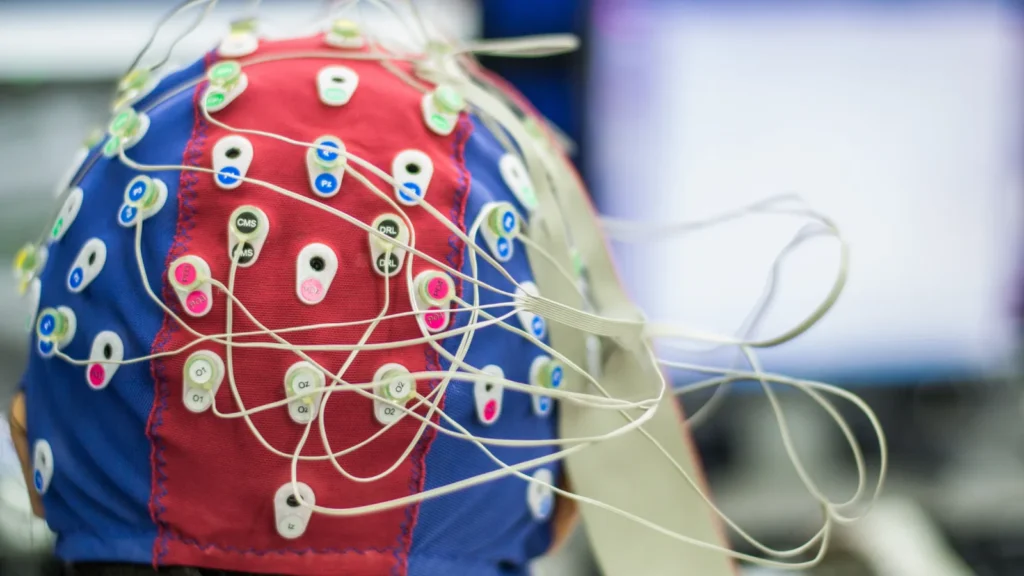
QEEG brain mapping reveals these individual differences. During a standard QEEG assessment, 19-21 electrodes placed on the scalp detect your brain’s electrical activity. Advanced computer analysis compares your patterns to a normative database of healthy brains, revealing exactly where your brain shows abnormal activity.
The QEEG map is typically displayed as a color-coded visualization. Different colors represent different frequency ranges and levels of activity. Red or yellow indicates excessive activity (too much beta, gamma, or theta). Blue or green indicates insufficient activity (too little alpha or proper regulation). This visual representation immediately shows which brain regions are dysregulated.
Beyond frequency analysis, advanced QEEG can measure:
- Coherence: Whether different brain regions are communicating effectively or showing pathological synchronization
- Phase relationships: The timing and coordination of activity between regions
- Network connectivity: How regions work together as integrated systems
- Asymmetry indices: Whether right and left hemispheres are balanced
This detailed neurobiological profile enables clinicians to create highly targeted treatment protocols addressing your specific anxiety pattern. Rather than generic anxiety treatment, you receive a precision-medicine approach to anxiety.
Neurofeedback Training for Anxiety: The Science Behind It
Once your QEEG assessment identifies your specific anxiety pattern, neurofeedback training targets those exact abnormalities. The goal is to retrain your brain to produce healthier patterns and regulate neural activity more effectively.
How Anxiety-Focused Neurofeedback Works
During a neurofeedback session, electrodes monitor your real-time brain activity. A computer immediately translates this activity into visual or auditory feedback. If your brain produces the target pattern (reduced excessive beta, increased alpha, improved prefrontal regulation), the feedback becomes rewarding—a video game progresses, sounds pleasant, or displays encouraging feedback. When your brain drifts toward dysregulated patterns, feedback becomes less rewarding.
This immediate feedback creates a conditioning process. Your brain learns to recognize the state of optimal regulation and automatically gravitates toward it. Over repeated sessions, this learning becomes automatic, and the healthier brain patterns stick around even outside neurofeedback training.
Anxiety-Specific Neurofeedback Protocols
Several evidence-based protocols target anxiety-related brain patterns:
Beta Reduction/Alpha Increase: Rewards the brain for increasing calm alpha waves while decreasing worry-related beta. This directly targets the dysregulation causing mental tension and racing thoughts.
Gamma Reduction: Focuses on reducing high-frequency gamma activity characteristic of obsessive thinking and hypervigilance. Particularly effective for generalized anxiety and OCD-spectrum disorders.
Right-Left Hemisphere Balancing: Targets the asymmetry characteristic of anxiety, helping rebalance threat detection with approach and positive engagement systems.
Anterior Cingulate Regulation: Reduces rumination and excessive error-monitoring by training down overactive anterior cingulate theta and beta.
Amygdala Regulation (Limbic Training): Uses targeted protocols to reduce amygdala hyperactivity and strengthen prefrontal-amygdala connections, reducing threat hypersensitivity.
The neuroplastic changes created through neurofeedback are lasting. Your brain literally rewires itself to achieve and maintain healthier patterns, creating improvements that persist long after training ends.
Real Success Stories: Anxiety Relief Through Brain Training
Real-world outcomes demonstrate the transformative power of QEEG-guided neurofeedback for anxiety:
Case 1: The Chronic Worrier
Madhu, 34, had struggled with generalized anxiety for 15 years. Her mind never stopped spinning with worst-case scenarios. Anti-anxiety medications made her foggy and dependent. Her QEEG revealed severe elevated gamma activity in her frontal lobes and elevated theta in the anterior cingulate—the classic pattern of obsessive worry. After 32 sessions of gamma/theta reduction neurofeedback, Madhu reported a dramatic shift. Her mind finally felt quiet. She could let thoughts pass without engaging them. Her QEEG normalized, showing substantially reduced gamma and theta. For the first time in years, she felt genuinely calm.
Case 2: The Hypervigilant Professional
Patel, 41, worked in high-stress finance and lived in constant fight-or-flight mode. His QEEG showed right-hemisphere dominance with hyperactive amygdala activity. He couldn’t relax, always scanning for problems. After 28 sessions focusing on hemisphere balancing and amygdala regulation, Patel noticed a fundamental shift in how he approached work. He could still perform at high levels but without the constant internal tension. His relationships improved as he became less reactive. His follow-up QEEG showed better hemisphere balance and reduced amygdala activity.
Case 3: The Social Anxiety Sufferer
Aparna, 28, couldn’t attend social events without overwhelming anxiety. Her QEEG revealed excessive beta activity with poor prefrontal regulation—her rational brain couldn’t calm her threat alarm. She started neurofeedback focused on beta reduction and prefrontal strengthening. By session 20, she noticed she could attend small gatherings. By session 35, she actually attended a wedding without debilitating anxiety. Her life transformed from isolation to social engagement.
Anxiety Disorders That Respond Well to QEEG Neurofeedback
Research shows QEEG-guided neurofeedback effectively addresses multiple anxiety disorder types. While each has distinct neurobiological characteristics, all respond to brain-targeted training.
Generalized Anxiety Disorder (GAD)
Characterized by constant worry about multiple life areas, GAD shows typical QEEG patterns of elevated beta and gamma, reduced alpha, and anterior cingulate hyperactivity. Neurofeedback targeting these specific patterns (gamma reduction, alpha increase, anterior cingulate regulation) produces substantial improvements in worry reduction and emotional regulation. Research shows 70-80% of GAD patients show clinically significant improvement with QEEG-guided neurofeedback.
Social Anxiety Disorder
Social anxiety involves fear of judgment and negative evaluation in social situations. QEEG often reveals right-hemisphere dominance, amygdala hyperactivity, and reduced prefrontal regulation. Training increases left-hemisphere activity, reduces amygdala reactivity, and strengthens prefrontal control. Many people with social anxiety find they can gradually re-engage socially as their anxiety patterns neurobiologically improve.
Panic Disorder
Panic involves sudden intense fear with physical symptoms (racing heart, shortness of breath). QEEG typically shows excessive beta in arousal centers and hyperactive insula (amplifying body sensation awareness). Neurofeedback training reduces arousal system overactivity and normalizes insula function, decreasing both panic attacks and anticipatory anxiety about panic occurring.
Performance Anxiety
Athletes, musicians, and professionals often experience anxiety specifically during performance. QEEG reveals excessive beta with poor frontal regulation. Neurofeedback trains the brain to maintain calm alertness during performance situations, improving focus and reducing the mental interference caused by anxiety.
How Long Before Anxiety Improves?
A common question is: “How quickly will I feel better?” Similar to ADHD neurofeedback, anxiety improvement follows a predictable timeline, though individual variation exists.
Weeks 1-4: Initial Adaptation
During initial sessions, many people report feeling relaxed during the neurofeedback session itself—a sign the brain is responding to the feedback. Some notice slight mood improvements, but observable anxiety reduction hasn’t typically emerged yet.
Weeks 5-10: Emerging Relief
Around sessions 10-15, many people notice the first reliable anxiety reductions. A situation that previously triggered significant worry might now feel manageable. The constant mental tension slightly decreases. These early improvements motivate continued training.
Weeks 11-20: Noticeable Improvement
By sessions 15-20, most people report clear anxiety reduction. Physical tension decreases, racing thoughts slow, and the constant worry feeling diminishes. They can handle previously anxiety-triggering situations with significantly less distress. Sleep often improves as the mind settles.
Weeks 21-30: Consolidation
Sessions 20-30 represent a consolidation phase where improvements become more stable and automatic. The brain has developed strong new patterns. Anxiety still occurs in response to genuine stressors, but it’s proportionate rather than excessive.
Beyond 30 Sessions: Long-Term Stability
After completing a full course (typically 30-40 sessions), most people maintain significant improvements long-term. The changes often last well beyond the end of training. While life stressors may occasionally spike anxiety, the baseline anxiety level remains substantially reduced and more manageable.
Important note: Individual timelines vary. Some people respond faster; others need more sessions. Consistency matters significantly—twice-weekly sessions typically produce faster results than once-weekly training.
Combining QEEG Neurofeedback with Therapy and Meditation
While neurofeedback is powerful standalone treatment, many people benefit from combining it with other evidence-based anxiety interventions.
Neurofeedback + Cognitive Behavioral Therapy (CBT)
While neurofeedback retrains your brain’s hardware, CBT teaches you cognitive and behavioral strategies for managing anxiety. The combination is synergistic: improved brain function makes CBT techniques more effective, and CBT reinforces the neurobiological changes created by neurofeedback.
Neurofeedback + Mindfulness Meditation
Many people find meditation becomes more accessible and effective once neurofeedback begins improving their baseline anxiety and brain regulation. Meditation and neurofeedback both increase alpha and improve prefrontal function, creating complementary benefits. Some clinicians incorporate mindfulness directly into neurofeedback training.
Neurofeedback + Medication
For some people, combining neurofeedback with anti-anxiety medication creates optimal outcomes. Medication provides rapid symptom relief while neurofeedback creates lasting brain changes. Over time, as neurofeedback takes effect, medication doses may potentially be reduced under medical supervision.
Neurofeedback + Lifestyle Optimization
Sleep, exercise, nutrition, and stress management all profoundly influence anxiety and brain function. Addressing lifestyle factors alongside neurofeedback accelerates progress and creates a comprehensive anxiety treatment approach.
Cost and Time Investment for Anxiety Treatment
Understanding the practical aspects of QEEG-guided neurofeedback helps with decision-making.
Initial Assessment Costs
A comprehensive QEEG assessment typically costs $300-$800 depending on clinician and location. Some insurance covers assessments; many don’t. The assessment provides your personalized brain map and informs your entire treatment protocol, making it a valuable investment.
Neurofeedback Session Costs
Individual neurofeedback sessions typically range from $75-$200 per session. A standard treatment course requires 30-40 sessions, representing a total investment of $2,250-$8,000. Some insurance covers neurofeedback; many don’t. Payment plans are often available.
Time Commitment
Most people train 2-3 times per week for 3-4 months (30-40 sessions). Each session runs 30-60 minutes plus travel time. This requires meaningful time commitment, which is a legitimate consideration for busy individuals.
Cost-Benefit Comparison
While the upfront cost of neurofeedback may seem high, consider that anxiety medications cost $50-$300 monthly indefinitely, requiring ongoing prescriptions. Talk therapy often requires weekly 50-minute sessions at $100-$200 per session for months or years. Neurofeedback’s advantage is that it creates lasting change—once completed, you maintain improvements without ongoing expense. For many people, the total cost of neurofeedback is comparable to or less than the cumulative cost of years of medication or therapy.
Frequently Asked Questions About QEEG and Anxiety
Can QEEG Brain Mapping Help with Anxiety?
Yes, substantially. Research demonstrates that QEEG-guided neurofeedback effectively reduces anxiety symptoms in 70-80% of people who complete training. QEEG is valuable because it identifies the specific neurobiological patterns driving your anxiety, enabling targeted treatment rather than generic anxiety protocols. Studies show effect sizes for neurofeedback comparable to or exceeding anti-anxiety medications.
What Does an Anxious Brain Look Like on a Brain Map?
An anxious brain map typically displays “warm” colors (reds, yellows, oranges) in frequency bands where activity should be lower (excessive beta or gamma) and in regions involved in threat processing (amygdala, anterior cingulate). “Cool” colors (blues, greens) appear where activity should be higher (alpha, particularly in frontal regions). The overall impression is often one of widespread frontal and limbic activation—the brain literally appears “overheated” or “overstimulated.”
How Does Neurofeedback Reduce Anxiety Symptoms?
Neurofeedback works through neuroplasticity. Real-time feedback about your brain activity allows your brain to learn to recognize and maintain healthier patterns. When you produce calmer, more regulated brainwave patterns, the feedback is rewarding. Your brain learns through repetition to automatically generate these patterns. Over time, these new patterns become automatic, and you experience lasting anxiety reduction because your brain’s baseline function has physically changed.
Is Brain Mapping Effective for Generalized Anxiety Disorder?
Yes, GAD responds particularly well to QEEG-guided neurofeedback. The chronic worry characteristic of GAD has clear neurobiological correlates visible on QEEG (elevated gamma, excessive beta, anterior cingulate overactivity). By targeting these specific patterns, neurofeedback directly addresses the brain basis of worry, producing substantial symptom reduction in most people completing treatment.
Can QEEG-Guided Treatment Replace Anti-Anxiety Medication?
For many people, yes. Research shows neurofeedback produces anxiety reduction comparable to or exceeding medications for many people. However, this is highly individual. Some people benefit most from neurofeedback alone, while others benefit from combining neurofeedback with medication. Some prefer to use neurofeedback to reduce medication under medical supervision. The best approach depends on your unique situation, severity of anxiety, and response to either intervention. Always consult with a physician before adjusting medications.
How Many Neurofeedback Sessions Are Needed for Anxiety Relief?
Most people experience meaningful anxiety reduction after 15-20 sessions, with full benefits typically achieved by 30-40 sessions. However, individual variation is significant. Some people need fewer sessions; others benefit from more. Consistency matters—training 2-3 times per week typically produces faster results than weekly training. Your clinician can provide personalized estimates based on your specific QEEG pattern and severity.
What Anxiety Symptoms Improve Most with QEEG Neurofeedback?
Research shows greatest improvements in: excessive worry and rumination (70-80%), physical tension and muscle tightness (65-75%), racing thoughts (70%), panic symptoms (65-75%), and sleep problems related to anxiety (70%). Social anxiety and performance anxiety also show substantial improvement rates (60-70%). The neurobiological improvements typically translate across multiple symptom domains as the brain’s overall regulation normalizes.
Take Your Free Anxiety Assessment
If anxiety has been controlling your life, it’s time to consider a fundamentally different approach. Rather than just managing symptoms with medication or therapy alone, you can actually address the neurobiological basis of your anxiety.
Understanding what’s happening in your anxious brain is the crucial first step. A comprehensive QEEG assessment reveals your unique anxiety pattern—showing exactly how your brain is dysregulated and what specific interventions will help.
At We Train Brains, we specialize in QEEG brain mapping and neurofeedback for anxiety across all presentations. Our clinical team has helped hundreds of people transform their relationship with anxiety by literally retraining their brains to respond differently.
Brain & Co. · Nashik & Mumbai
Talk to us about a QEEG brain map
Every programme starts with a conversation and a QEEG brain map, so the plan is built from your own data. Leave your number and we will call you back within one working day.
- Non-invasive, no medication involved
- Centres in Nashik (Sharanpur Road) and Mumbai (Lower Parel)
- More about a QEEG brain map at Brain & Co. →