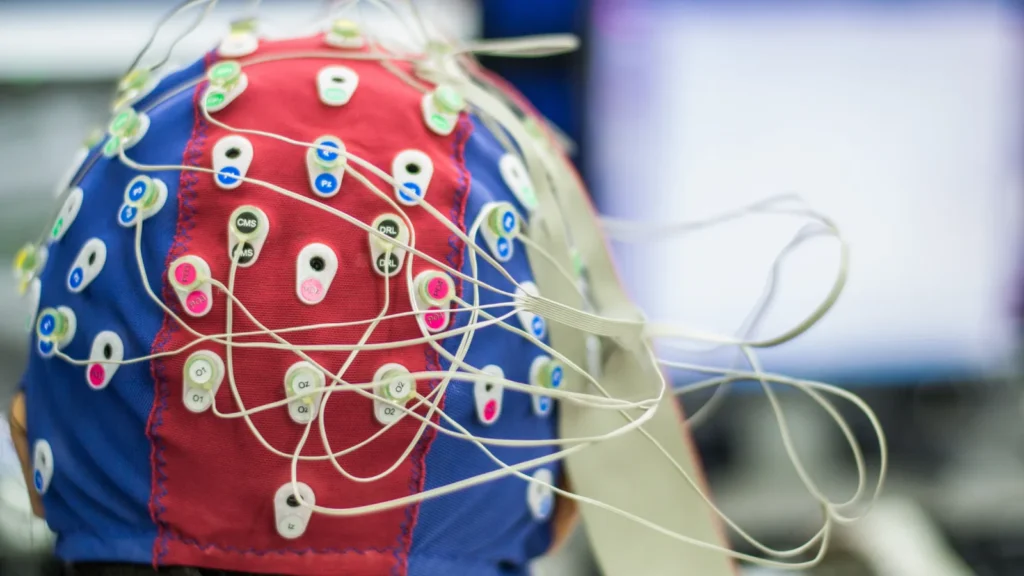

If you or a loved one has been struggling with attention difficulties, impulsivity, or hyperactivity, you’re not alone. Millions of people worldwide deal with Attention-Deficit/Hyperactivity Disorder (ADHD), yet traditional diagnosis often relies on behavioral questionnaires and clinical observation rather than actual brain activity measurement. But what if you could see the brain’s electrical activity and identify exactly what’s causing attention problems? Enter QEEG for ADHD—a revolutionary approach that uses quantitative electroencephalography to map brain function with precision, enabling personalized, medication-free treatment through neurofeedback.
This comprehensive guide explores how QEEG brain mapping works, what it reveals about ADHD brains, and how neurofeedback training can dramatically improve focus, impulse control, and overall cognitive performance—without relying on stimulant medications.
Understanding ADHD and Brain Function
Attention-Deficit/Hyperactivity Disorder is far more than just difficulty paying attention. ADHD is a neurological condition that affects how the brain regulates attention, impulse control, and executive function. Traditional diagnoses have relied heavily on behavioral checklists, but this approach misses the fundamental brain-based nature of the condition.
The brain functions through electrical activity—billions of neurons firing and communicating through electrical signals. These signals create distinct patterns, called brainwave frequencies, that correlate with different mental states and cognitive functions. When these patterns are disrupted or dysregulated, symptoms like poor focus, impulsivity, and hyperactivity emerge.
Modern neuroscience has discovered that ADHD brains operate differently from neurotypical brains. This isn’t a character flaw or lack of discipline—it’s a measurable difference in how brain regions communicate and regulate neural activity. Understanding this neurobiological foundation is the first step toward effective, personalized treatment.
The Neuroscience of ADHD: What QEEG Reveals
QEEG (Quantitative Electroencephalography) is a sophisticated neuroimaging technique that measures the electrical activity of the brain. Unlike traditional EEG, which provides raw waveforms, QEEG uses advanced computer analysis to quantify and map brain activity across multiple frequency bands, creating a detailed “brain map” of neural function.
Here’s how QEEG works: 19-21 electrodes are placed on the scalp in standardized positions using the international 10-20 electrode placement system. These electrodes detect tiny electrical signals generated by neuronal activity. A computer then analyzes these signals, breaking them down into frequency bands (delta, theta, alpha, beta, gamma) and comparing them to a database of normal, healthy brains.
The result is a comprehensive map showing where the brain has too much activity (hyperactivity) or too little activity (hypoactivity) at specific frequencies. This level of detail is impossible to achieve with behavioral assessments alone—it allows clinicians to see the actual neurological basis of ADHD symptoms.
QEEG Patterns Associated with ADHD
Research has identified consistent QEEG patterns in ADHD brains. While each person’s brain map is unique, certain abnormalities appear frequently in individuals with attention difficulties:
Excess Theta Activity
Theta waves (4-8 Hz) are associated with drowsiness, daydreaming, and reduced mental effort. People with ADHD often show elevated theta activity, particularly in frontal and central regions of the brain. This excess theta correlates with poor focus, mind-wandering, and the subjective experience of “brain fog.” It’s as if the brain is operating in a semi-drowsy state even when the person is trying to concentrate.
Reduced Beta Activity
Beta waves (13-30 Hz) represent focused, alert mental activity. ADHD brains typically show insufficient beta activity, especially in the prefrontal cortex—the region responsible for executive function, planning, and impulse control. Inadequate beta activity means the brain lacks the electrical “fuel” needed for sustained attention and self-regulation.
Theta/Beta Ratio Imbalance
One of the most important QEEG markers is the theta/beta ratio. A high ratio (excess theta relative to beta) is strongly associated with ADHD symptoms. This imbalance literally means there’s too much drowsy activity and not enough focused activity—explaining the attention difficulties and hyperactivity that often appears as the brain tries to compensate for insufficient arousal.
Frontal Lobe Hypoactivity
The prefrontal cortex is essential for attention, decision-making, and impulse inhibition. ADHD is frequently characterized by underactivation in this region, visible on QEEG as reduced overall activity. This explains why ADHD individuals struggle with planning, organization, and impulse control—their executive function center simply isn’t firing with sufficient strength.
Excessive Alpha Activity
Alpha waves (8-12 Hz) are typically associated with relaxed wakefulness. Some ADHD subtypes show too much alpha, indicating insufficient cortical activation even at rest. This can manifest as sluggish cognitive processing and reduced mental energy.
How Brain Mapping Creates Personalized ADHD Treatment Plans
One major limitation of traditional ADHD treatment is that it applies a one-size-fits-all approach. Everyone diagnosed with ADHD receives similar medication or behavioral recommendations, regardless of their unique brain patterns. This explains why some people respond well to treatment while others don’t—their specific neurobiological patterns weren’t actually addressed.
QEEG brain mapping revolutionizes this approach by creating a precise, individualized neurobiological profile. Instead of assuming all ADHD presentations are identical, clinicians can identify each person’s unique pattern of dysregulation and design interventions specifically targeting those abnormalities.
For example, consider two people both diagnosed with ADHD. Person A has excessive theta in the frontal lobe but normal beta activity. Person B has normal theta but significantly reduced beta. Traditional treatment would likely recommend the same stimulant medication for both. But their brains need fundamentally different interventions. Person A might benefit from neurofeedback targeting theta reduction, while Person B needs beta enhancement training. The QEEG map reveals these differences, enabling clinicians to match treatment to neurobiology.
The QEEG-guided treatment plan typically includes:
- Specific neurofeedback protocols targeting the identified abnormalities
- Recommendations for cognitive behavioral strategies based on the brain patterns
- Lifestyle modifications (sleep, exercise, nutrition) optimized for the individual’s neurotype
- Monitoring through repeat QEEG assessments to track progress
Neurofeedback Training for ADHD: How It Works
Neurofeedback is the therapeutic application of QEEG brain mapping. While the QEEG map identifies the problems, neurofeedback actually fixes them—by training the brain to produce healthier, more optimal brainwave patterns.
Here’s how neurofeedback training works:
- Real-Time Brain Monitoring: During a neurofeedback session, electrodes monitor your brain activity, and a computer displays this information in real-time as visual or auditory feedback. You might see a video game that responds to your brainwaves, or hear tones that change pitch based on your brain activity.
- Learning Through Feedback: When your brain produces the desired brainwave pattern, the feedback becomes rewarding—the video game progresses, the tone sounds pleasant, or you earn points. When your brain drifts back to dysregulated patterns, the feedback becomes less rewarding. This creates a conditioning process similar to biofeedback for other bodily functions.
- Neuroplastic Change: Through repeated sessions (typically 20-40 sessions), your brain gradually learns to maintain the healthier brainwave patterns. This is neuroplasticity—the brain’s ability to physically reorganize itself based on experience and training. Over time, these patterns become automatic, and you experience sustained improvements in focus, impulse control, and emotional regulation.
The key advantage is that neurofeedback literally retrains your brain to work better. Unlike medication, which temporarily masks symptoms by chemically altering brain function, neurofeedback creates lasting changes by strengthening your brain’s natural capacity for self-regulation.
Research demonstrates that neurofeedback for ADHD typically involves one of several protocols:
Theta/Beta Training
The most researched protocol rewards decreasing theta while increasing beta. This directly addresses the core theta/beta imbalance present in most ADHD cases. Clients learn to simultaneously reduce drowsy brain activity and enhance focused activity.
Alpha/Beta Training
This protocol targets cases where excessive alpha activity contributes to sluggish cognitive tempo and low arousal. Training increases beta while reducing alpha.
HEG (Hemoencephalography) Neurofeedback
This advanced technique measures blood flow in the prefrontal cortex. Training increases blood flow to the executive function center, enhancing attention and self-control even in difficult cases.
Real Patient Stories: ADHD Improvements with QEEG & Neurofeedback
Real-world outcomes demonstrate the power of QEEG-guided neurofeedback. Consider these representative cases:
Case 1: The Scattered College Student
Devi, 19, struggled with focus despite being intelligent. Her QEEG revealed severe theta excess and theta/beta ratio imbalance in her frontal lobes. After 24 sessions of theta/beta neurofeedback, her academic performance improved from C’s to B’s. More importantly, she reported being able to study for extended periods without mental fatigue. Her QEEG normalized, showing reduced theta and increased beta. For Devi, neurofeedback provided lasting improvement without any medication side effects.
Case 2: The Restless Child
Vignesh, 8, was disruptive at school and difficult to manage at home. His QEEG showed frontal lobe hypoactivity and elevated theta/beta ratio. His parents were reluctant to use medication. After 30 sessions of neurofeedback, Vignesh showed dramatic behavioral improvements. Teacher reports indicated better self-control and focus. His parents noticed improved compliance and emotional regulation at home. Follow-up QEEG showed normalized activity in the prefrontal cortex.
Case 3: The Medication-Resistant Adult
Mohammad, 42, had tried multiple ADHD medications but experienced unacceptable side effects including anxiety and decreased appetite. His QEEG revealed an unusual pattern: normal theta but severely reduced beta throughout the brain, combined with excessive alpha. Standard ADHD treatment hadn’t worked because his neurobiological pattern was atypical. Through 35 sessions of alpha/beta training combined with targeted HEG neurofeedback to the prefrontal cortex, Mohammad experienced substantial improvement in focus and productivity. His follow-up QEEG showed robust increases in beta and decreased alpha.
ADHD in Children vs. Adults: Different QEEG Patterns
ADHD manifests differently across the lifespan, and QEEG reveals these differences at the neurobiological level. Understanding age-specific patterns is crucial for effective diagnosis and treatment.
ADHD in Children
Children with ADHD typically show dramatic theta/beta imbalances with elevated theta activity particularly pronounced in frontal and temporal regions. The patterns are usually more extreme than in adults. Children’s immature prefrontal cortices compound the dysregulation, making neurofeedback particularly effective during this developmental window when brain plasticity is highest. Early intervention through neurofeedback can literally reshape developing neural circuits, potentially preventing the full crystallization of ADHD patterns.
ADHD in Adolescents
Adolescents present a transitional pattern. As the prefrontal cortex continues development through the early 20s, some teens show patterns intermediate between childhood and adult ADHD. Hormonal changes also influence brain function, and some adolescents develop more emotion-regulation difficulties alongside attention problems. Neurofeedback for teens should address both attention and emotional regulation components.
ADHD in Adults
Adult ADHD often presents with more subtle QEEG abnormalities than childhood ADHD, but the theta/beta imbalance persists. Adults frequently show more focal dysregulation in specific brain regions rather than global abnormalities. Additionally, many adults with undiagnosed ADHD have developed anxiety or depression as secondary conditions, which can alter QEEG patterns. Adult neurofeedback requires careful protocol selection to address the primary ADHD dysregulation while potentially addressing comorbid conditions.
Combining QEEG Neurofeedback with Other ADHD Treatments
While neurofeedback is powerful, many people benefit from a comprehensive, multimodal approach that combines several evidence-based interventions.
Neurofeedback + Cognitive Behavioral Therapy (CBT)
While neurofeedback retrains the brain’s hardware, CBT teaches practical strategies and addresses unhelpful thinking patterns. CBT helps with time management, organization, and working around remaining difficulties. The combination accelerates progress and creates lasting behavioral changes alongside neurobiological improvements.
Neurofeedback + Coaching
ADHD coaching focuses on practical systems for organization, task initiation, and follow-through. Combining neurofeedback with coaching creates environmental and neurobiological support simultaneously.
Neurofeedback + Medication
Some individuals benefit from combining neurofeedback with medication management. Rather than choosing between brain retraining and medication, both can work together. Medication provides temporary symptom relief while neurofeedback creates lasting neurobiological change. Over time, as neurofeedback takes effect, medication doses may potentially be reduced under medical supervision.
Neurofeedback + Lifestyle Optimization
Sleep, exercise, nutrition, and stress management all profoundly influence brain function and ADHD symptoms. Comprehensive treatment addresses all these factors alongside neurofeedback for synergistic benefits.
Timeline: When to Expect Improvements
One common question is: “How quickly will I see results?” The honest answer is that improvement follows a predictable but gradual timeline influenced by several factors.
Weeks 1-4: Initial Awareness
During the first few sessions, many people report feeling relaxed during neurofeedback training—the brain is beginning to develop new pathways but visible behavioral changes haven’t emerged yet. Some individuals notice subtle improvements in energy or mood, but these are inconsistent.
Weeks 5-10: Emerging Changes
Around session 10-15, many people notice the first reliable behavioral improvements: slightly better focus, fewer moments of mind-wandering, or improved impulse control in specific situations. These changes are often first noticed by family members or colleagues. The brain is solidifying new patterns.
Weeks 11-20: Noticeable Improvement
By session 20-25, most people report clear, consistent improvements: sustained attention during work or study, better emotional control, improved task initiation, and reduced impulsivity. These changes are significant enough that people report meaningful improvements in academic, professional, or social functioning.
Weeks 21-30: Consolidation
Sessions 25-30 typically represent a consolidation phase where improvements become more stable and reliable. The brain has developed strong new neural patterns. Performance is more consistent across different situations and times of day.
Beyond 30 Sessions: Long-Term Stability
After completing a full course of training (typically 30-40 sessions), most people maintain improvements long-term. The brain has physically changed—neural pathways have been rewired. While occasional “booster” sessions might be helpful years later, the gains often last.
Cost-Benefit: QEEG Neurofeedback vs. Medication
Choosing between neurofeedback and medication is an important decision. Each approach has distinct advantages and disadvantages worth carefully considering.
QEEG Neurofeedback Advantages
- No medication side effects—no appetite suppression, sleep disruption, anxiety, or dependency risk
- Creates lasting change—improvements persist long after treatment ends
- Personalized—treatment targets your specific brain patterns
- Safe for all ages, including during pregnancy
- Improves overall brain function—benefits extend beyond attention to mood, sleep, and emotional control
QEEG Neurofeedback Limitations
- Time commitment—requires 20-40+ sessions over 3-6 months
- Upfront cost—may range from $3,000-$8,000 depending on clinician and location
- Requires motivated participation—success depends on consistent engagement
- Gradual onset—improvements are slower than immediate medication effects
Medication Advantages
- Rapid symptom relief—improvements often noticeable within hours
- Convenient—simple daily dosing
- Lower upfront cost—typically $20-$100/month
- Works for most people—high response rates (70%+)
Medication Limitations
- Side effects—appetite loss, sleep disruption, anxiety, elevated heart rate, mood changes
- Dependency risk—benefits diminish if medication is stopped
- Doesn’t address underlying neurobiology—masks symptoms rather than treating cause
- Trial-and-error—may require weeks to find right medication and dose
- Contraindications—may interact with other medications or conditions
The Bottom Line: Neither approach is universally superior. Neurofeedback is ideal for people seeking a longer-term, drug-free approach who can invest the time required. Medication is appropriate for those needing rapid symptom management or unable to commit to neurofeedback training. Many people benefit most from combining both approaches.
Frequently Asked Questions About QEEG and ADHD
Can QEEG Diagnose ADHD?
While QEEG is not a diagnostic tool in the traditional sense (no QEEG pattern is present in 100% of ADHD cases), it provides objective neurobiological evidence supporting ADHD diagnosis. QEEG combined with clinical history, rating scales, and behavioral assessment creates a more comprehensive diagnostic picture than behavioral methods alone. Most importantly, QEEG can identify cases where ADHD-like symptoms stem from other neurological conditions (sleep disorders, seizure disorders, brain injury aftermath), preventing misdiagnosis.
How Does Brain Mapping Help with ADHD?
Brain mapping reveals the specific neurobiological pattern causing each person’s ADHD symptoms. This knowledge enables truly personalized treatment—addressing the actual brain dysfunction rather than applying generic protocols. Additionally, brain mapping tracks treatment progress objectively. You can see whether neurofeedback training is actually normalizing brain function, providing concrete evidence of neurobiological change.
Is Neurofeedback Effective for ADHD?
Research demonstrates significant effectiveness. Meta-analyses show effect sizes for neurofeedback comparable to or exceeding those for ADHD medication. A large study in the Journal of Attention Disorders reported that 80% of participants showed clinically significant improvements. Effect sizes are larger in studies using QEEG-guided protocols versus standardized protocols, confirming that personalization enhances outcomes.
Can You Treat ADHD Without Medication Using Brain Mapping?
Yes, QEEG-guided neurofeedback is an effective medication-free treatment. While medication works for many people, a significant percentage experience unacceptable side effects or simply prefer non-pharmacological intervention. Neurofeedback successfully treats ADHD for the majority of people who complete training, making it a legitimate alternative to medication.
What Does an ADHD Brain Look Like on a QEEG Map?
An ADHD brain map typically shows “cool” colors (blues and greens) in frequency bands where activity should be more active (beta range), and “warm” colors (reds and yellows) in regions where activity is excessive (theta range). The color gradient represents the degree of abnormality. The visual representation makes it immediately clear which brain regions are dysregulated—something impossible to understand from behavioral description alone.
How Long Does It Take to See Results from Neurofeedback?
Most people notice initial improvements around session 10-15, with increasingly noticeable changes by session 20. Full benefits typically manifest by session 30-40. However, individual variation exists—some see changes faster, others require more sessions. Consistency matters: twice-weekly sessions typically produce faster results than weekly sessions.
Is QEEG-Guided Neurofeedback Better Than Medication?
“Better” depends on priorities and individual circumstances. Neurofeedback can create lasting change with few side effects, but requires significant time investment. Medication provides rapid relief with minimal time commitment but carries side-effect risks and requires ongoing use. For most people, they represent complementary options rather than direct competitors. The choice depends on your values, circumstances, and neurobiological response to either intervention.
Get Your ADHD QEEG Assessment Today
If you or someone you love is struggling with ADHD, you deserve to understand the neurobiological basis of these challenges. A comprehensive QEEG assessment provides that understanding—showing exactly what’s happening in the brain and opening the door to truly personalized, effective treatment.
At We Train Brains, we specialize in QEEG brain mapping and neurofeedback for ADHD across all ages. Our clinical team has helped hundreds of individuals transform their lives by literally retraining their brains to work better.
Whether you’re seeking an alternative to medication, looking for more effective treatment, or simply want to understand your brain better, we’re here to help. The journey to better focus, greater impulse control, and improved quality of life begins with understanding your unique brain.
Brain & Co. · Nashik & Mumbai
Talk to us about a QEEG brain map
Every programme starts with a conversation and a QEEG brain map, so the plan is built from your own data. Leave your number and we will call you back within one working day.
- Non-invasive, no medication involved
- Centres in Nashik (Sharanpur Road) and Mumbai (Lower Parel)
- More about a QEEG brain map at Brain & Co. →