
The key is to work it out mutually and amicably. Here are things you can do to deal with various levels of anxiety
Avoid contempt, criticism, defensiveness, and stonewallingRenowned author and marriage therapist Dr. John Gottman calls these “4 Horsemen Of The Apocalypse.” Contempt hints at you suggesting that you know better than the person in front of you. Criticizing involves you being critical of not the person’s specific behaviours but his/her character in general. Defensiveness is when you turn the situation around and place the blame on someone else, in turn portraying yourself as the victim. Stonewalling is when you refuse to be confronted and engage in any conversation or take efforts to find solutions.Be completely open about why you’re anxious Your anxiety may not just be COVID-19 related alone but must be associated with a past traumatic event such as the death of a close one, seeing someone suffering at the hospital, etc. As a result, you may be fearing your family member experiencing the same fate. Whatever the reason is, don’t keep it to yourself. Let your loved ones know. Give them the benefit of the doubt that they might get where you’re coming from and will do things to make you less anxious and put you at ease. Don’t be too controlling or nagging It’s understandable that you may want your loved ones to act a certain way, given your anxiety. However, being too controlling or nagging will only push them away and make them more rebellious. Instead, allow them to do their own things, but with the knowledge that they are being cautious. For example, even if your loved ones do wish to step outside say for a run, or to visit the grocery store, have faith that they will be careful and encourage them to wear masks, use sanitizers, etc. Create your goals and share with one another Be vocal about what you wish to achieve during this pandemic. Do you wish to be safe, build your immunity, finish personal tasks you’ve never had the time to complete before? Share your goals and once you do that, you will see a shift. Your loved ones will work towards helping you achieve your goals and you will do the same for them. This will create peace and harmony. Help lower the anxiety levels You may be carefree and relaxed. But that doesn’t mean you disrespect what the other is going through. Living with anxiety can be exhausting and extremely difficult. So instead of attacking or criticizing the person who is going through it, be mindful and try and do things to calm them down. These can include introducing them to Yoga, deep-breathing, meditation, anxiety-reducing supplements like GABA, etc. What will help further is that if you yourself engage in these to support them.Encourage practicing caution
During troubled times like these, it’s neither okay to be too anxious nor is it okay to be too careless. You need to hit a moderate point where you and your family practice caution but are not ridden with extreme anxiety.Brain training can help you get rid of your anxiety for good as well as help you achieve your goals
Sometimes no matter how many tricks you try in the book, your anxiety stays. Correct? Don’t worry it’s not your fault and nor are you not trying hard enough. It’s all got to do with your brainwaves. Have you ever wondered about what really makes you so anxious and the other person so negligent? It all comes down to the way your brain has now been trained to function.What you need to know about brainwaves and how they make your anxiety or carelessness a habit
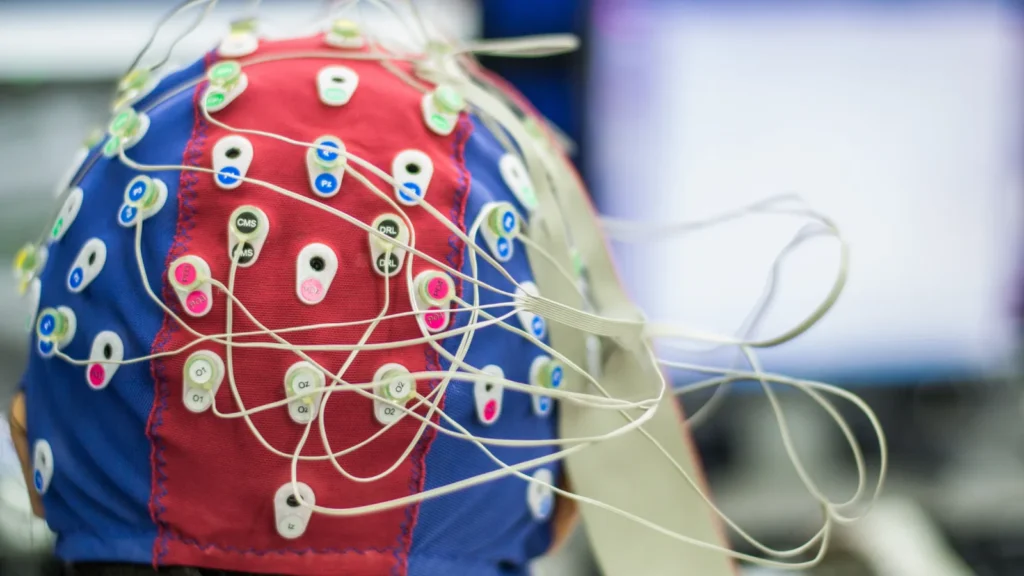
Our brain works in patterns. These patterns are formed as a result of learned fears and habits, trauma, injury, or birth defects. For example, your habits like walking, cycling, using your smartphone, driving, etc. are a result of neural pathways formed in the brain with repetition. These have become fixed patterns. The more these pathways are used, the stronger they become. That is why you don’t have to think and concentrate while doing these things. They happen automatically.Even your tendency to get anxious, stressed out, overwhelmed, angry or your depression even, is a learned behaviour operating in fixed patterns. And for that impulsive person in the house who feels he/she is invincible and COVID-19 can’t touch him/her, this behaviour too may be born out of an imbalance of brainwaves. Irrespective of the cause for dis-balance of brainwaves and fixed patterns, these can be changed with the help of brain training. To learn more about the QEEG-guided brain training technology Neurofeedback, watch this video.Brain & Co. offers med-free treatment that could help you overcome some of the challenges that come with depression/anxiety/sleep issues/ADHD etc. Visit our website or give us a call to learn more.Brain & Co. · Nashik & Mumbai
Talk to us about anxiety
Every programme starts with a conversation and a QEEG brain map, so the plan is built from your own data. Leave your number and we will call you back within one working day.
- Non-invasive, no medication involved
- Centres in Nashik (Sharanpur Road) and Mumbai (Lower Parel)
- More about anxiety at Brain & Co. →